

Choosing between Display & Video 360 (DV360) and The Trade Desk (TTD) is one of the higher-stakes decisions an enterprise marketing team makes in 2026. Both are credible enterprise demand-side platforms. Both buy programmatic media across display, video, audio, and connected TV. Both have AI-driven bidding, brand safety controls, and the scale to support a multi-million-dollar media plan.
The differences live underneath the homepage claims. They show up in how each DSP integrates with your measurement stack, how its commercials are structured, what minimum spend each makes sense at, and how its AI is fuelled.
This guide compares the two honestly, in 2026 terms, for Australian and New Zealand teams. A note on lens up front: XPON is a Google Marketing Platform Sales Partner. That makes us a DV360 reseller. We’re calling out the scenarios where TTD is the better choice exactly as plainly as the ones where DV360 wins, because comparison content is only useful if it’s fair.
In this guide:
- In short
- How DV360 and TTD compare
- When DV360 is the right choice
- When The Trade Desk is the right choice
- The honest middle ground
- How to evaluate without buying the wrong thing
- Frequently asked questions
In short
The short version:
| Scenario | The right DSP |
|---|---|
| You already run GA4, GA4 360, CM360 or SA360 and want a single measurement model | DV360 |
| Your media plan is YouTube-heavy or includes Google TV inventory | DV360 |
| You want transparent commercials with a clear split between media and technology cost | DV360 |
| Brand safety, verification and audience tools matter and you don’t want to pay extra for them | DV360 |
| You want minimal dependency on the Google stack as a strategic choice | The Trade Desk |
| Your measurement stack is built on Adobe or a multi-cloud, vendor-neutral design | The Trade Desk |
| TTD’s Ventura CTV operating system or its open-web identity framework is central to your plan | The Trade Desk |
| You’re undecided but want streamlined media operations and a Google-connected stack | DV360 (our default recommendation) |
There are scenarios where each platform clearly wins and scenarios where the other does. Running both is a viable option for some large teams, but for most we recommend a single DSP for more streamlined media operations, and DV360 as the default. The rest of this guide walks through how to tell which scenario you’re actually in.
How DV360 and TTD compare on the things that actually matter
Six dimensions are where the real decision happens. We’ve ordered them by how often they’re the deciding factor in real ANZ scoping conversations.
1. Pricing model and transparency
The pricing models are structurally different and that drives a lot of the rest.

DV360 is licensed and accessed through Google Marketing Platform Sales Partners. The commercial structure is a percentage of media spend for the platform fee, plus partner services, billed by the partner. A practical advantage here is transparency: in DV360 you can clearly see the division between media cost and technology or tooling cost, so you know how much of your budget is actually buying impressions. Google does not publish DV360 pricing publicly. As a guide, partner-managed DV360 engagements in ANZ typically require a working media budget that clears around AUD $25,000 per month before the engagement makes commercial sense, though specifics depend on product mix, contract length, and services scope. For a deeper look at how DV360 is structured and priced, see our DV360 guide. For a current quote, you need to engage a Sales Partner like XPON directly (contact us for a quote here).

The Trade Desk charges a percentage of media spend, commonly reported by industry sources as somewhere in the 10 to 20 percent range, with the exact rate depending on volume and contract. TTD’s commercial structure tends to bundle media and technology cost together rather than itemising them, so the share of spend actually reaching media is less visible than in DV360. It is also worth a watch-out: through 2026 TTD has pushed its data and identity offering (including Unified ID 2.0 and its Data Alliance) more aggressively, and layering third-party data and identity on top of the base platform fee can push total non-media costs higher than the headline percentage suggests. Direct TTD accounts typically have minimum monthly spend commitments that industry estimates put around AUD $5,000 to $15,000 per month, with agency-managed accounts pricing differently.
We want to be transparent that the TTD pricing figures here are commonly-reported estimates from industry coverage rather than published rates. Both DSPs treat exact commercials as customer-specific.
The practical implication: at a media budget under around $15,000 per month, TTD via an agency is often more accessible. At $25,000+ per month, DV360 with a Sales Partner becomes commercially viable and the integration benefits start to pay for themselves. Above $100,000 per month, the commercial difference between the two often narrows and the decision moves to fit on the other five dimensions. Whatever the budget, ask either provider to show you the split between media and non-media cost before you sign.
2. Inventory and supply
Both DSPs reach a deep pool of premium inventory across display, video, audio and connected TV. The decision is rarely about who can reach a given publisher at all, and more about commercial route and where each has a structural edge.
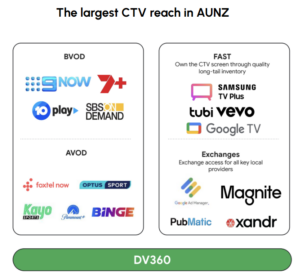
DV360 has direct access to Google Display Network, the wider DV360 marketplace, the largest range of curated marketplace deals, and (uniquely) integrated YouTube and Google TV buying as first-class channels. It also reaches the major premium streaming publishers, open-web display, and curated marketplaces, either through open exchange or via deals. DV360 gives you granular control over which inventory and exchanges you buy: if an advertiser wants to exclude Google Ad Manager or Google owned-and-operated inventory for any reason, DV360 lets you do that explicitly.
The Trade Desk has built much of its identity outside the Google ecosystem: OpenPath for direct publisher supply, Unified ID 2.0 as an open-web identity framework, and in 2026 Ventura, its own CTV operating system for TV manufacturers, a deliberate move to build an OEM-level position alongside platforms like Roku and Amazon. TTD’s strength is a programmatic supply chain and identity layer that is deliberately independent of any single large platform.
The practical implication: if YouTube or Google TV is a material part of your video plan, DV360 has the cleaner, first-class route to that inventory, and it still gives you broad open-web and premium streaming reach besides. If your strategy specifically values an identity and supply layer built independently of Google, or TTD’s Ventura CTV position is central to your plan, that is a point in TTD’s favour. For most ANZ teams, neither DSP “has better inventory” in a blanket sense, the question is which one’s structural strengths line up with your plan.
3. Integration with the rest of your stack
This is where the largest single decision is often made.
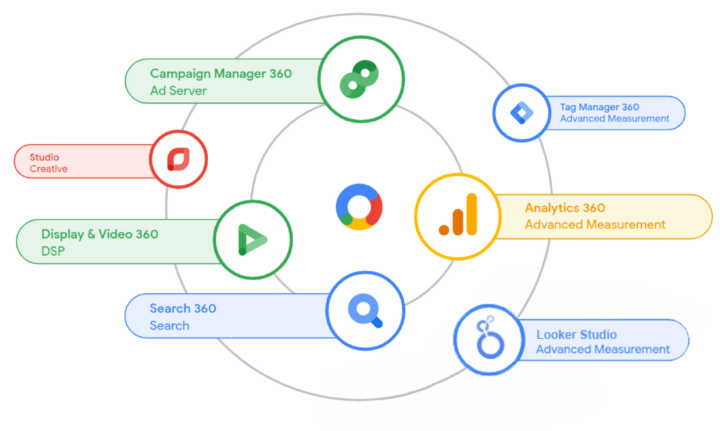
DV360 integrates natively with the rest of Google Marketing Platform. GA4 audiences flow into DV360. CM360 Floodlight tags activate across DV360 campaigns. SA360 search activity informs DV360 audience strategies. Google Cloud and BigQuery data can be modelled and pushed back into DV360 as activation audiences. If you’re already running GA4 360, CM360, or SA360, the integration cost of DV360 is effectively zero. It is worth being clear that DV360 is not a closed Google-only system: it integrates with non-Google infrastructure too, including third-party CDPs such as Wondaris and publishers and exchanges outside Google’s own inventory.
The Trade Desk integrates with a wide set of third-party tools: most major CDPs (Segment, Tealium, mParticle, Hightouch, Wondaris), independent verification vendors, and TTD’s own Unified ID 2.0 framework. Where TTD has a relative edge is in environments that are deliberately built away from Google, for example a measurement stack centred on Adobe Analytics or a multi-cloud data environment, where TTD typically integrates with less friction than DV360.
The practical implication: for teams already in the Google stack, DV360 is materially lower friction and still connects to your non-Google tools. For teams running Adobe, multi-cloud, or a deliberately vendor-neutral measurement strategy, TTD often integrates more cleanly.
4. AI and automation features
Both DSPs have credible AI features. The differentiator is which dataset fuels them and how deeply AI runs through the platform.
DV360 uses Google AI across more than bidding. Custom bidding in DV360 optimises against your first-party and business data, powered by Google AI technology and more than 40 impression-level signals. Beyond bidding, Gemini-powered workflows now run across DV360 for tasks like campaign QA, reporting, and audience generation, so the AI is not confined to a single optimisation feature.
The Trade Desk runs its AI through Kokai, the platform it launched in late 2024 and has built its 2026 narrative around. Koa remains the underlying AI engine, and by early 2026 Kokai had integrated Koa’s Adaptive Trading Modes, which automate bidding against real-time return-on-investment signals rather than manually set parameters. Kokai is fuelled by TTD’s broad view of the open programmatic market, a wide signal pool across many inventory sources.
The practical implication: if your first-party data is mature (GA4 360 with BigQuery, a CDP, well-tagged conversion events), DV360’s AI has more of your specific signal to work with, and Gemini-powered workflows reduce manual lift across the campaign lifecycle. If your strength is reach and you’re optimising across a wider, more heterogeneous open-web pool, Kokai’s broader signal base often performs well. Both are credible.
5. Reporting and measurement
DV360 plus CM360 plus GA4 360 gives you a unified Google-native measurement model. Floodlight handles conversions, DV360 handles delivery, CM360 handles cross-channel ad serving, GA4 360 attributes outcomes. One source of truth, native attribution across all channels in one report. For CFOs and CMOs who want the simplest possible reporting structure, this combination is hard to beat. It is worth noting CM360 is not exclusive to DV360: it connects directly to both DV360 and The Trade Desk, though the integration benefits are deeper on the DV360 side.
The Trade Desk has strong native reporting and dashboarding, and integrates with independent measurement and attribution providers for cross-channel views. That is more flexibility for vendor-neutral measurement designs, but typically more moving parts and more vendor management overhead than a single Google-native model.
The practical implication: for one-source-of-truth Google-native reporting, DV360. For multi-vendor measurement environments where flexibility is valued over consolidation, TTD.
6. Support and training
DV360 is accessed through Sales Partners (like XPON). The partner provides services that flex to how your team wants to work: training and enablement so your team runs DV360 with partner support, hands-on activation support, or a combination, and partners can also work alongside your existing agency. At XPON specifically, a large share of our DV360 work is with in-house teams who run the platform themselves, with us providing enablement and support rather than taking the platform off them. DV360 rewards self-sufficient customers, and partners are there to build that capability, not to gatekeep it.
The Trade Desk has TTD Edge Academy for self-paced training and in-house TTD account managers. TTD has also leaned into a “white-glove” managed service in recent years and flexibly adjusts the level of service to customer needs. Many ANZ TTD users sit at agencies, and agency support is widely available.
The practical implication: both platforms support a spectrum from fully self-run to heavily supported. DV360 through a partner is a strong fit whether you want enablement for an in-house team or more hands-on help. TTD likewise offers both self-serve and managed paths. The deciding factor here is less the platform and more the partner or account team you work with.
When DV360 is the right choice
Five scenarios where DV360 is the clear answer:
- You already run GA4 360, CM360, or SA360. The integration value of DV360 inside the rest of GMP is significant, and you keep one Google-native measurement model.
- Your media plan is YouTube-heavy or includes Google TV. DV360 has direct, first-class access to YouTube and Google TV inventory, alongside broad open-web and premium streaming reach.
- You want transparent commercials. DV360 shows a clear split between media cost and technology cost, so you can see how much of your budget is actually buying impressions.
- You want enterprise brand safety, verification and audiences without paying extra for them. These tools are included in DV360, whereas TTD’s commercial structure can charge separately for brand safety and audience data.
- You have, or want to build, a self-sufficient in-house programmatic team. DV360’s data connectivity and AI capabilities reward in-house expertise, and a GMP partner can provide the enablement to get a team there.
When The Trade Desk is the right choice
Five scenarios where TTD is the clear answer:
- You want minimal Google-stack dependency as a strategic choice. If avoiding concentration with one large platform is a deliberate decision, TTD’s open-web identity and supply layer is built for that.
- Your measurement and data stack is built away from Google. If you run Adobe Analytics, a non-Google CDP as your centre of gravity, or a multi-cloud data environment, TTD typically integrates with less friction than DV360.
- TTD’s Ventura CTV operating system is central to your plan. If TTD’s OEM-level CTV position and its open-web identity framework are strategically important to how you want to buy connected TV, that points to TTD.
- Your attribution strategy is vendor-neutral by design. If you have deliberately chosen independent, platform-agnostic measurement and attribution providers, TTD fits that design with less friction than a Google-native model.
- You are committed to TTD’s identity framework. If your inventory partners and data strategy are aligned around Unified ID 2.0 and OpenPath, TTD is the natural home for that approach.
The honest middle ground
Some mature ANZ enterprise teams do run both DV360 and The Trade Desk, usually at combined media budgets above around AUD $50,000 per month, and it is a viable option. The argument for it is real: each DSP runs to its structural strengths, no single supplier bottlenecks the whole operation, and running both makes like-for-like performance benchmarking possible.
That said, it is not what we would recommend for most teams. Our recommendation is a single DSP. Running two platforms means two sets of pacing, two optimisation cycles, two reporting models to reconcile, and either two specialist teams or one team that is genuinely deep on both, which is rare. For most teams the operational overhead outweighs the marginal gain, and a single, well-run DSP delivers more streamlined media operations and a cleaner line of sight from spend to outcome.
Where a single DSP is the right call, our recommendation is DV360, for the reasons set out above: transparent commercials with a clear media-versus-technology split, brand safety and audience tools included rather than charged for, first-class access to YouTube and Google TV alongside broad open-web reach, AI that strengthens as your first-party data matures, and native connectedness to the rest of Google’s ecosystem so GA4, CM360, SA360 and BigQuery all feed one measurement model. For teams whose strategy is deliberately built away from Google, The Trade Desk remains the better single-DSP choice, as covered above. The honest answer is that running both is possible, but a single DSP run well is usually the stronger operating model, and for most teams that DSP is DV360.
How to evaluate without buying the wrong thing
Before any DSP decision, work through five questions honestly with your team:
- What’s your minimum monthly media spend, realistically, for the next 12 months? This is the single biggest commercial input. If your plan is under AUD $15,000 per month, neither DSP partner-managed is likely the right entry point. Look at agency-managed TTD or smaller programmatic providers.
- What percentage of your media plan is connected TV versus display versus video versus audio? Channel mix tells you which DSP’s structural strengths align with your plan.
- How self-sufficient is your team, and how do you want a partner to work with you? Both platforms support a spectrum from fully self-run to heavily supported. Be honest about where you sit and what you want from a partner or account team.
- What’s your measurement stack today? GA4 360 with BigQuery? Adobe Analytics? A deliberately vendor-neutral environment? The answer often makes one DSP obvious.
- What’s your buying philosophy? Google-stack-first, vendor-neutral by design, or open-web-first? This is rarely articulated but it’s the strategic input that should make the answer click into place.
If you can answer these five honestly, the DSP choice is usually clear. If you can’t, that’s the signal to bring in an expert before signing a contract.
Frequently asked questions
Is DV360 cheaper than The Trade Desk?
Neither DSP is universally cheaper. The pricing models are structurally different: DV360 is a percentage-of-spend platform fee plus partner services, with a clear split between media and technology cost. TTD is a percentage of media spend (commonly 10 to 20 percent based on industry coverage, not Google or TTD published rates), and tends to bundle media and technology cost together, so the share reaching media is less visible. Layering third-party data and identity on TTD can also lift total non-media cost above the headline percentage. At lower media budgets (under AUD $15,000 per month), TTD via an agency is usually more accessible. At higher budgets ($25,000+ per month), partner-managed DV360 becomes commercially viable and the integration savings often offset the platform fees. For a current quote on either, you need to engage a Sales Partner (DV360) or TTD account team directly.
What’s the minimum spend for DV360 vs The Trade Desk?
Neither minimum is publicly published. Industry-reported estimates put partner-managed DV360 at around AUD $25,000 per month working budget before the engagement makes commercial sense, with significant variation by partner, product mix, and contract length. TTD account minimums are commonly reported in the AUD $5,000 to $15,000 per month range for direct accounts, less for agency-managed. These are estimates from industry coverage rather than vendor-published numbers. Confirm specifics with the partner or vendor directly.
Can I use both DV360 and The Trade Desk?
You can, and some large enterprise teams in ANZ do, usually at combined media spend above AUD $50,000 per month. It is a viable option. For most teams, though, we recommend a single DSP rather than two: running both means duplicated pacing, optimisation and reporting, and the operational overhead usually outweighs the benefit. A single, well-run DSP gives more streamlined media operations and a cleaner line from spend to outcome, and for most teams our recommendation for that single DSP is DV360.
Which DSP has better connected TV inventory?
Neither has “better” CTV inventory in a blanket sense. Both reach the major premium streaming publishers. DV360 has a unique first-class route to YouTube and Google TV, and a wide range of curated marketplace deals besides. TTD has built an independent CTV position, including its 2026 Ventura operating system for TV manufacturers and its open-web identity framework. The right answer depends on which inventory and which identity approach matter most to your plan, not on one platform having categorically more reach.
Does DV360 work without CM360?
Yes. DV360 can run as a standalone DSP without CM360. However, the full measurement value of DV360 (cross-channel Floodlight tracking, integrated reporting, attribution) is materially better when paired with CM360. CM360 itself connects to both DV360 and The Trade Desk, so it is not exclusive to DV360, though the integration benefits are deeper on the DV360 side. Most enterprise DV360 estates in ANZ run CM360 alongside DV360. If you’d like the full picture on CM360, our Campaign Manager 360 guide walks through how it fits the rest of GMP.
What’s the difference between DV360’s custom bidding and TTD’s Kokai?
Both are AI-driven optimisation. DV360’s custom bidding optimises against your first-party and business data, powered by Google AI technology and more than 40 impression-level signals, and Gemini-powered workflows extend that AI into QA, reporting, and audience generation. TTD’s Kokai is the platform it launched in late 2024 and built its 2026 narrative around; the Koa engine underneath it now includes Adaptive Trading Modes, which automate bidding against real-time return signals. Kokai draws on TTD’s broad open-web signal pool across many inventory sources. The practical difference: DV360’s AI gets stronger as your owned data matures, Kokai gets stronger as your reach broadens across open-web inventory. Both are credible.
Do I need an agency or partner to use DV360 or The Trade Desk?
For DV360, yes. DV360 is sold through GMP Sales Partners; you can’t buy DV360 directly from Google. The partner provides training and enablement, hands-on support, or a mix, and can work alongside an existing agency. For TTD, technically no (TTD has direct accounts) but in practice most ANZ enterprise users either work with an agency or run TTD in-house with a dedicated programmatic team.
How do DV360 and The Trade Desk handle the deprecation of third-party cookies?
Both DSPs have invested in privacy-safe targeting and measurement, and both now lean on the strength of their data signals rather than third-party cookies. DV360 draws on Google’s first-party signal and your own modelled data from GA4 and BigQuery, combined with Google AI, to target and optimise without relying on cookies. TTD has invested heavily in Unified ID 2.0, an industry-wide identity framework, plus its OpenPath direct publisher relationships. In ANZ specifically, both DSPs work well today, but the long-term effectiveness of each depends on which identity frameworks and signal sources your inventory partners adopt. Server-side tagging and a strong first-party data strategy are now table stakes for either platform.
Talk to our programmatic team
If you’re trying to work out which DSP fits your team, we run a 30-minute scoping conversation that maps your media plan, measurement stack, and budget against the right approach. We’ll give you honest input whether DV360, The Trade Desk, or both is the right call, and whether or not we end up being the right fit for the implementation.